Field notes
- Transformation made culture records evidentiary: event identity, vector context, selection, regeneration, and assays all matter.
- Plant tissue culture is a bridge technology in biotechnology, not a mere support step.
- Evidence-aware records help teams discuss what is observed, what is tested, and what remains unresolved.
Gene transfer
Agrobacterium made plant transformation feel biologically plausible
Agrobacterium changed the imagination of plant biotechnology because it was not merely a tool invented outside plants. It was a biological system researchers could study, redirect, and adapt.
By the early 1980s, plant transformation work was showing that bacterial genetic material could be introduced and expressed in plant cells. Tissue culture then became the bridge: transformed cells had to be selected, maintained, regenerated, observed, and interpreted.
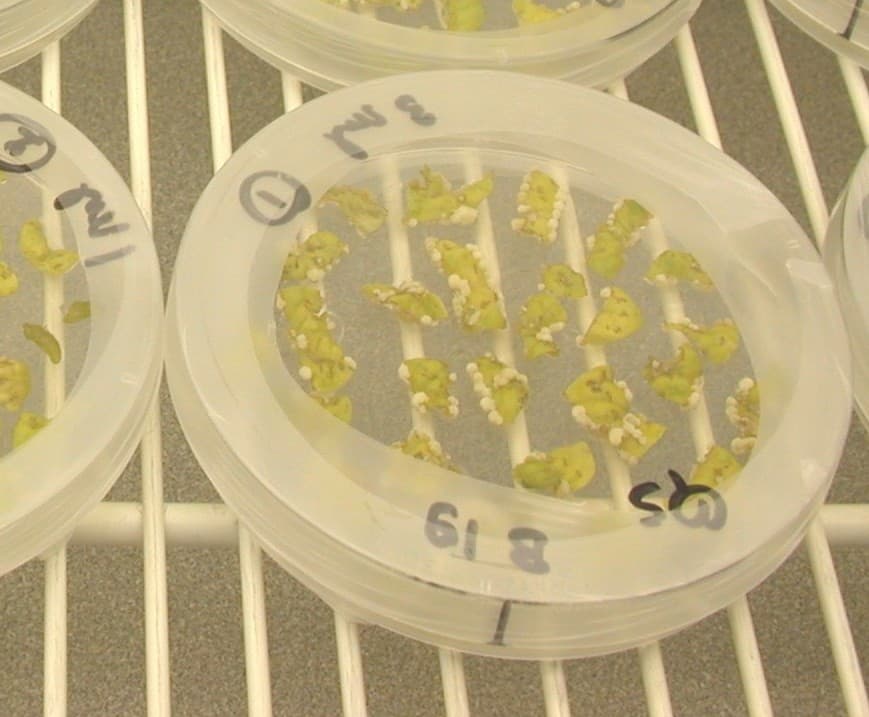
The culture vessel was no longer just a propagation chamber. It became one chapter in an evidence chain that stretched from molecular design to regenerated plant material.
In biotechnology, a culture without its event history is only a photograph of uncertainty.
Event identity
The transformed plant needs more than a plant label
Transformation introduced a new kind of identity problem. A line might carry plant background, explant source, vector context, selection history, regeneration path, assay results, and greenhouse observations.
Those pieces do not all live in the same format. Some are lab notes. Some are images. Some are SOP steps. Some are test references. Some are decisions made by a team when a result was ambiguous.
An evidence-aware record does not flatten that complexity. It keeps the pieces connected so the team can review what was actually shown and what still needs confirmation.
Back to culture
Even high biotechnology still depends on regeneration
The most futuristic parts of plant biotechnology still return to an old tissue culture problem: can the selected material become a plant that can be grown, observed, and compared?
That makes media, organ formation, transfer timing, contamination observations, and acclimation records newly important. Transformation may begin with molecular intent, but it still moves through living tissues.
Good software should make that bridge visible. It should let a lab connect the molecular context it cares about to the practical culture history that made the plant possible.
Evidence-aware claims
The future of plant records is narrower, clearer, and more reviewable
Biotechnology invites overstatement. The antidote is not dull writing. It is precise writing: observed, tested, linked, reviewed, pending, confirmed within scope.
That is the editorial posture this blog series takes, and it is the product posture xPlant should keep. Record what happened. Link the evidence. Keep uncertainty visible. Let strong claims earn their strength.
The history of tissue culture is not only a story of plants growing in glass. It is a story of labs learning to make living evidence travel.
From history to workflow
Keep the evidence close to the culture
Sources
References and credits
- Agrobacterium-mediated plant transformation: the biology behind the gene-jockeying toolReview of Agrobacterium-mediated transformation biology.
- Expression of bacterial genes in plant cellsPubMed record for early plant transformation work using Agrobacterium Ti plasmid context.
- A revised medium for rapid growth and bio assays with tobacco tissue culturesMurashige and Skoog's 1962 medium paper in Physiologia Plantarum.