Industry News5 min read
What Michigan State's greenhouse grant buys, and why it is no price guide
The USDA has awarded more than $16.2 million toward Michigan State University's research greenhouse renovation, matched to more than $32.5 million. Here is what it buys, why that matters to anyone acclimating plantlets, and why it is no price guide for a commercial house.
Field notes
- The USDA's National Institute of Food and Agriculture awarded more than $16.2 million for Michigan State University's Plant Science Research Greenhouse Complex renovations, matched by MSU to more than $32.5 million.
- About 60% of the research greenhouses have already been renovated with roughly $40 million from the State of Michigan and MSU units; the new funds are for the remaining 40%.
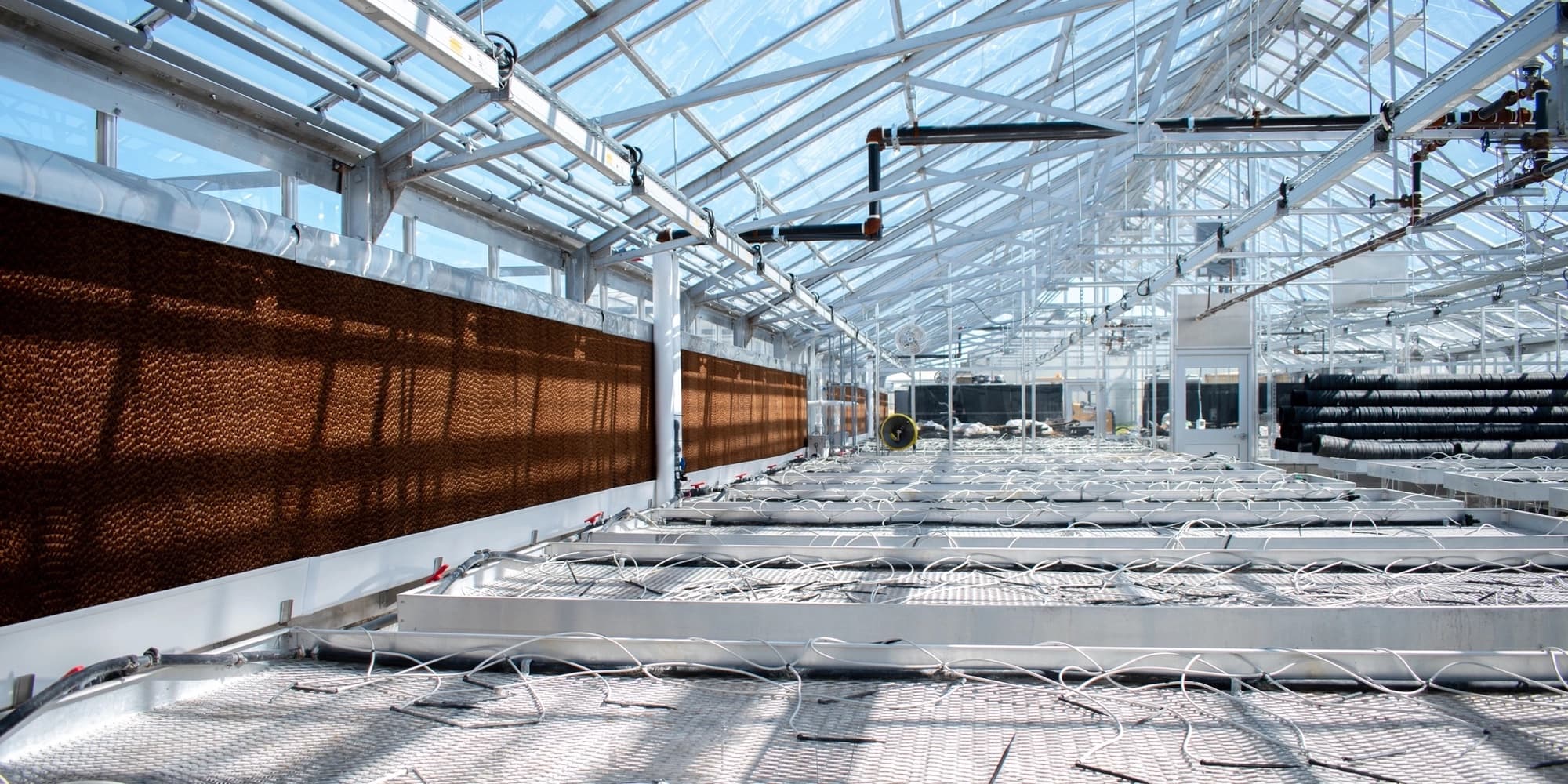
- The work adds LED lighting, environmental controls, taller ceilings, and automated shade and energy curtains.
- It is no price guide for a commercial propagation house: the release gives no area or cost per square metre.
- The controls a research greenhouse buys for repeatable experiments are the ones that make acclimation repeatable.
A number, and what is behind it
On 12 October Greenhouse Grower published Michigan State University's announcement that the USDA's National Institute of Food and Agriculture has awarded more than $16.2 million, through its Research Facilities Act Program, for the university's ongoing renovation of its Plant Science Research Greenhouse Complex.
MSU is providing matching funds, as the program requires, which takes the new support to more than $32.5 million. The university says its award was the third largest from a total of $121 million invested in research facilities across the country.
If you are costing out a propagation house this year, it is tempting to read that as a benchmark. It is a better guide to what a modern research greenhouse is built to control.
Where the project stands
The release says roughly $40 million from the State of Michigan and MSU units has already paid for new construction and renovation of about 60% of the research greenhouses: a new headhouse, environmental control systems, LED lighting, glazing panels and taller ceilings for larger crops.
When the latest phase finished in April 2026, the remaining 40% had received little to no updates. The new money is for those houses, which serve more than 400 users in the College of Agriculture and Natural Resources and the College of Natural Science.
The specification
What the money buys
For the unrenovated houses the release lists LED lighting, environmental controls and taller ceilings, and, across the complex, automated shade and energy curtains that let researchers set light exposure, temperature and humidity while using less energy.
Erik Runkle, professor and MSU Extension specialist in horticulture and co-chair of the greenhouse user committee, puts the purpose plainly: much tighter and more reliable control of temperature and light, which he calls the main drivers of plant growth. He adds that the new houses remove height limits on tall crops and obstacles in drought and pest research.
Why a research greenhouse is a lab story
For a tissue culture lab, the greenhouse is where the vessels end. Acclimation, the move from a sealed jar to open air, is where a great many plantlets are lost, and much of what decides it is the same short list this project is buying: humidity held steady, light that can be shaded, and temperature that holds through a sunny afternoon.
That is the useful reading of an announcement like this one. The controls a university pays for to make experiments repeatable are the controls that make acclimation repeatable, at a much smaller scale.
Before you budget
Why it is not a price guide
Do not price your own build from this. A university research complex carries code, accessibility, redundancy and procurement costs a commercial propagation house does not, and a renovation budget includes demolition and work-around costs a new build does not. The release gives no area or cost per square metre, and dividing the total by anything would invent a figure it never gave.
What transfers is the order of priorities: control of light and temperature first, then shading and energy curtains, then the height and layout that let one space serve more than one crop.
The call
Chad Cotti, MSU AgBioResearch's interim director, says the upgrades already made let its scientists run many types of experiments that were not possible before. For a commercial lab the lesson is narrower and cheaper: record the conditions each batch of plantlets acclimates in, and you will know which control your own losses depend on before you pay for any of them.
From the news to the lab
Keep your own records ready for whatever changes
Sources
References and credits
- Michigan State Receives More Than $16.2 Million for Greenhouse RenovationsTrade press · Greenhouse Grower · Michigan State University's announcement of the USDA NIFA award, 12 October 2026