xPlant Pro Editorial Series

Plant Science

Research a propagation lab can use — breeding, germplasm, pathology and new technique — reported carefully and translated for the bench.

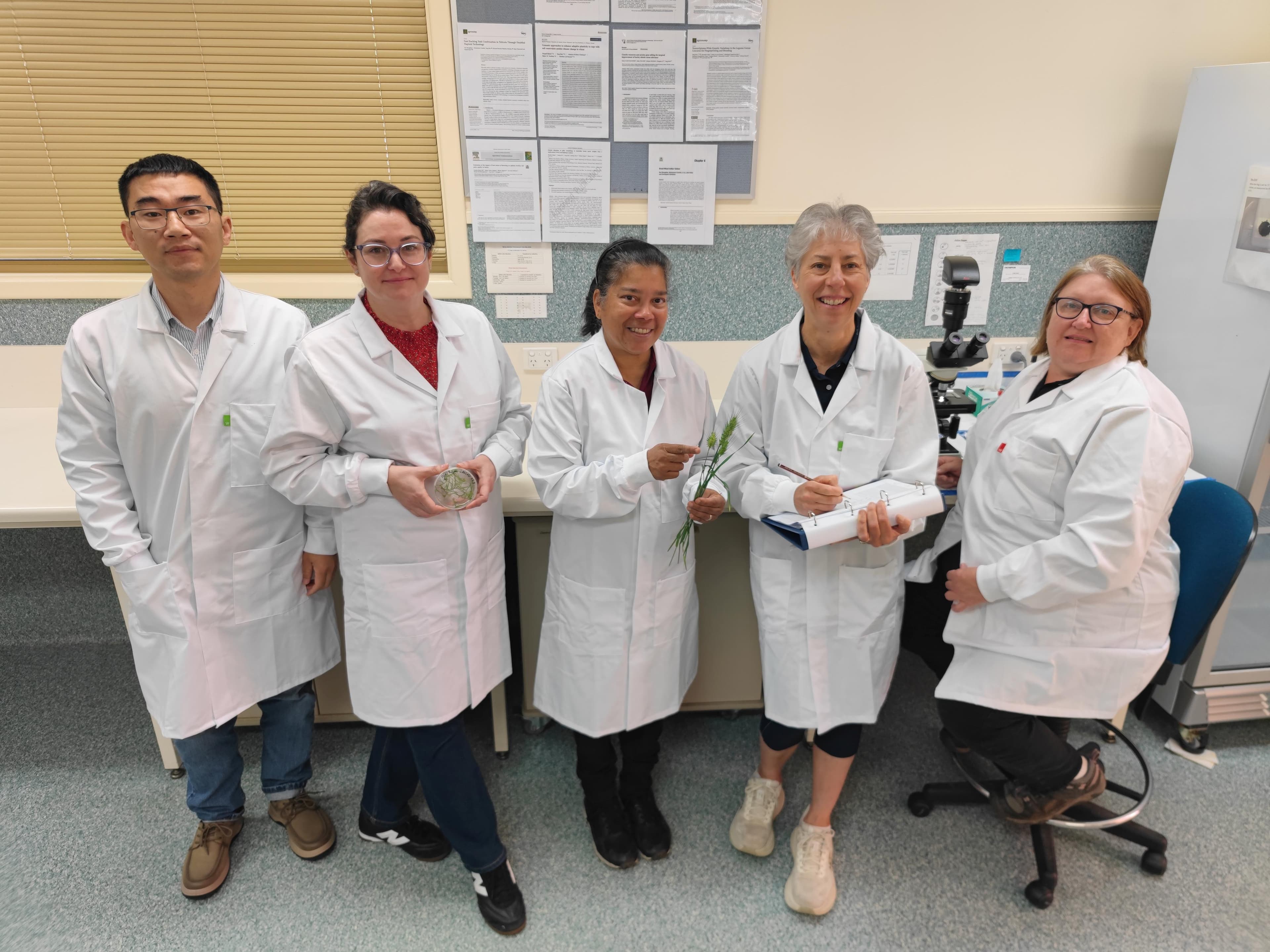
Five research scientists and technical officers in laboratory coats in a laboratory
Research scientists and technical officers at Western Australia's Department of Primary Industries and Regional Development, who are working on the doubled haploid project for wheat and barley.Courtesy of the Department of Primary Industries and Regional Development, Government of Western Australia

Editorial standard

Source-linked, visual, and claims-aware

Most tissue culture research reaches a working lab years late, if at all. This series reads the work that matters to commercial propagation and says what it would take to use it: the explant, the kit, the success rates, and what is still unproven.

Research scientists and technical officers at Western Australia's Department of Primary Industries and Regional Development, who are working on the doubled haploid project for wheat and barley.Courtesy of the Department of Primary Industries and Regional Development, Government of Western Australia

Plant Science

Doubled haploids: what anther and microspore culture ask of a working lab

Western Australia's Department of Primary Industries and Regional Development has started a three-year project to make doubled haploid breeding of wheat and barley faster and cheaper. Here is the technique it builds on — the explant, the trigger, the kit, and the part of a breeding cycle it actually compresses.
Reading path