Plant Science8 min read
Doubled haploids: what anther and microspore culture ask of a working lab
Western Australia's Department of Primary Industries and Regional Development has started a three-year project to make doubled haploid breeding of wheat and barley faster and cheaper. Here is the technique it builds on — the explant, the trigger, the kit, and the part of a breeding cycle it actually compresses.
Field notes
- Western Australia's DPIRD has started a three-year, GRDC co-funded project to make doubled haploid production of wheat and barley faster and cheaper, with LongReach Plant Breeders and InterGrain.
- Anther culture uses the whole anther as the explant; isolated microspore culture separates the microspores from the anther's own tissue and cultures them as a suspension. Which gives more green plants depends on species, genotype and protocol.
- Response is strongly genotype-dependent and driven heavily by donor plant condition and bud stage, which is why published protocols often fail to transfer between cultivars.
- Beyond a standard micropropagation setup, the work adds controlled donor plant space, microspore staging, pretreatment units, suspension handling and ploidy verification.
- Doubled haploids compress the inbreeding phase only — field evaluation, seed increase, trialing and registration take what they always took.
Breeding support
The job request a clonal lab can't answer off the shelf
If you run a micropropagation lab, the inquiry arrives eventually: a breeding program wants doubled haploid lines, and asks whether you can take the work on. You have hoods, autoclaves, growth rooms and people who can handle a scalpel in a laminar flow — and almost none of that settles the question.
Doubled haploid production is tissue culture, but it is not the tissue culture most commercial labs are set up for. The explant is not a shoot tip. The response is driven as much by the donor plant and the day the buds were picked as by what is in the jar. And the output is not a clone of the mother plant; it is a new, fully homozygous line that has to be checked for ploidy before anyone calls it anything.
A new research project has put the capacity back in front of breeders, which makes it a reasonable moment to set out what the technique is, what bench kit it needs beyond a standard multiplication lab, and — the part that gets oversold — which stage of a breeding cycle it actually shortens.
What the project is
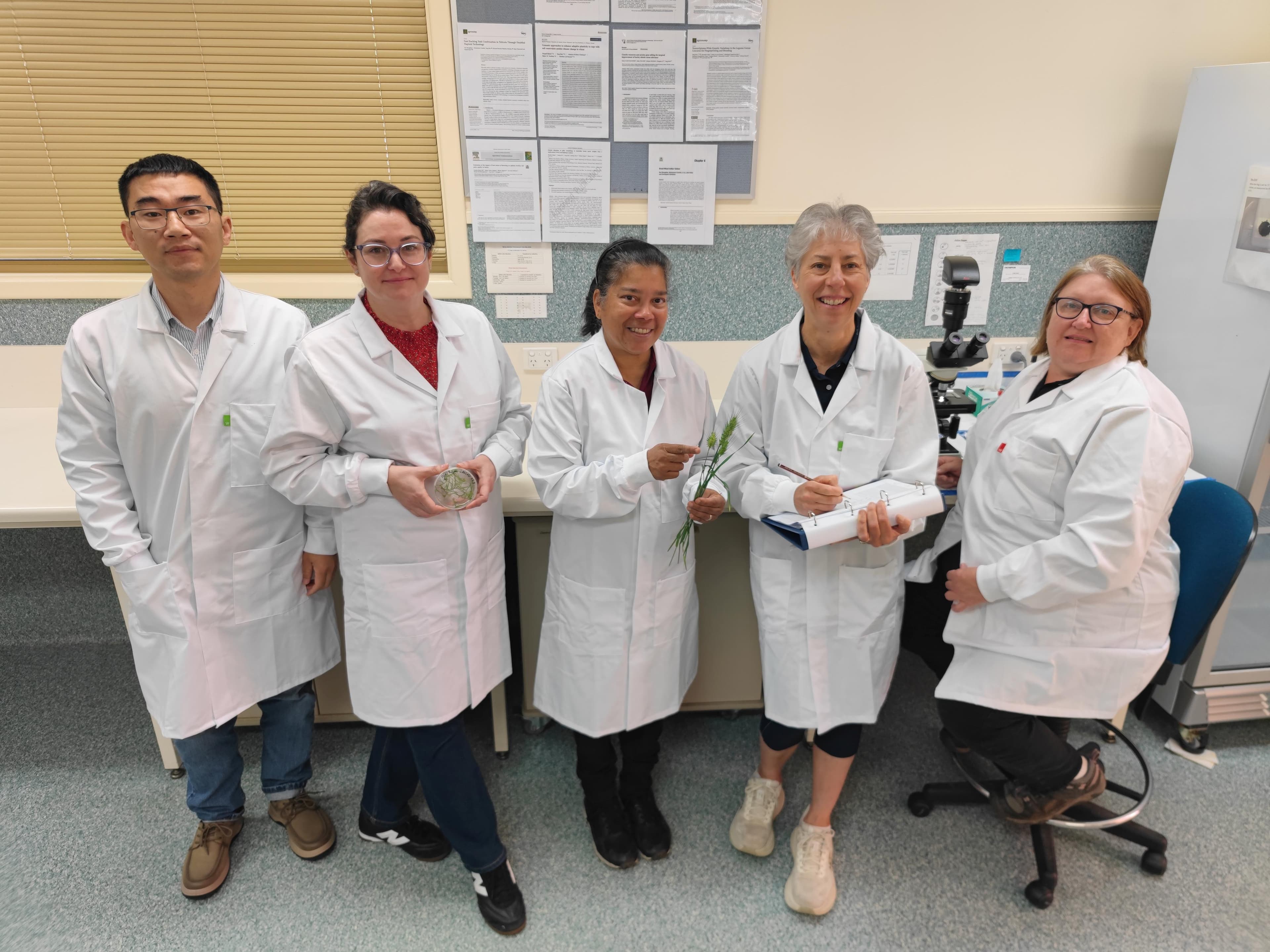
Western Australia's Department of Primary Industries and Regional Development (DPIRD) announced the project on 14 October 2026. It runs for three years, is co-funded by the Grains Research and Development Corporation (GRDC), and covers wheat and barley. The aim is to make doubled haploid production faster and cheaper: the team will look for the genes that control how tissue responds in culture, improve anther culture protocols, and explore whether culture medium conditioned by female ovaries helps male microspores develop. DPIRD is working with the breeding companies LongReach Plant Breeders and InterGrain.
The release says the technology shaves years off variety development, without putting a figure on it, and it gives no protocol details. Nothing below describes the project's own methods. It is background on the technique the project builds on, and every number a lab would actually need has to come from the protocol it decides to work from.
What anther and microspore culture are, in bench terms
Both routes start from immature pollen rather than from somatic tissue.
In anther culture, the explant is the whole anther, excised from a flower bud at a defined stage of microspore development and plated on media. Microspores inside the anther are induced to divide and form embryos or callus, which are then regenerated into plantlets. It is the simpler of the two routes to set up: dissection under a hood, solid or liquid media, standard vessels.
In isolated microspore culture, the microspores are released from the anthers, cleaned up, and cultured as a suspension at a controlled density. It is more demanding — centrifugation, density separation, cell counting. What it buys is separation from the anther's own tissue: a study of durum wheat credits it with more true embryos, a quicker route to true haploid and doubled haploid plants, and less somaclonal variation than anther culture. Which route gives more green plants in practice depends on the species, the genotype and the protocol. Either way, a regenerant is not a doubled haploid until someone has checked its ploidy.
Both routes depend on the same switch. In normal development a microspore becomes pollen. Haploid induction diverts it into an embryogenic pathway, and the diversion is triggered by stress applied to the buds or the isolated cells — cold, heat, or nutrient starvation, depending on the species and the protocol. Regenerants that come through are haploid: one set of chromosomes, usually sterile.
The last step is chromosome doubling, which produces the homozygous, fertile doubled haploid. In some species a proportion of regenerants double spontaneously; in others an antimitotic treatment is applied. The compounds used for induced doubling are hazardous, and the agent, concentration, exposure time and handling regime are part of whichever published protocol a lab adopts. They are not in the material here, so they are not here.
Why it works, as far as anyone knows
The value is genetic, and it is straightforward. A haploid cell carries one allele at every locus. Double the chromosome complement and every locus is homozygous — in a single step, from a single cell, instead of through repeated generations of selfing. For a breeder, that turns a segregating population into fixed lines that can be evaluated as lines.
The mechanism underneath the switch is much less settled. Why a stressed microspore abandons gametophytic development and starts dividing sporophytically is still described in the literature as incompletely understood, which is exactly why the technique behaves the way working labs complain it behaves.
Response is strongly genotype-dependent. A protocol that performs in one cultivar can produce nothing in another cultivar of the same species. This is the single biggest reason a published method fails in somebody else's hands.
Donor plant condition matters as much as media. Growing conditions, plant age and the stage of the buds at collection all move the response, which puts a controlled donor environment on the critical path rather than on the nice-to-have list.
Albinism is a recognized failure mode, particularly in cereal anther culture: regenerants that come up without functional chloroplasts and never make it to a field.
Culture-derived variation is real and, here, permanent. Gametoclonal variation arising in culture is fixed homozygously in the doubled line. A doubled haploid is uniform; uniform is not the same as faithful to the parent.
Where the evidence stops: there is no general rule that transfers a working doubled haploid protocol across species, and in several crops across cultivars. Response rates, doubling rates and regeneration frequencies belong to the genotype and the conditions they were measured in.
The kit it asks for beyond a standard micropropagation lab
Assume you already have flow hoods, an autoclave, media prep and growth rooms. Doubled haploid work typically adds seven things to that.
Donor plant capacity under control. Dedicated growth room or glasshouse space where temperature, light and nutrition can be held steady, because donor physiology drives the response and a bad batch of buds cannot be rescued downstream.
Staging capability. A compound microscope and a routine for staging microspores, so buds are collected in the developmental window the protocol specifies rather than by bud length and hope.
Pretreatment capacity. Controlled cold or heat units able to hold buds or isolated cells at a set temperature for a set period, with the reliability to do it the same way every run.
Suspension handling, if you go the isolated microspore route: a centrifuge, density separation, a haemocytometer or cell counter, and people comfortable working with liquid cultures at defined densities.
Ploidy verification. Flow cytometry is the fast route; chromosome counts and guard cell chloroplast counts are the slower ones. Without verification you do not know whether a regenerant is haploid, doubled, or a mixoploid chimera, and a mixoploid shipped as a doubled haploid is a problem that surfaces in somebody else's trial.
Containment and waste handling appropriate to any chemical doubling step, under the safety regime the protocol specifies.
Batch records that actually tie together. Donor plant, collection date, bud stage, pretreatment, media lot, response count, ploidy result — per batch. Tracking that in a lab system such as xPlant records what each batch received and what came out of it; it does not change the response rate.
What it shortens, and what it leaves exactly as long
The compression is specific: doubled haploids collapse the inbreeding phase. The generations of selfing conventionally needed to approach homozygosity are replaced by one pass through culture plus a doubling step.
Everything else stays where it was. Field evaluation of the resulting lines takes what field evaluation takes. Seed increase takes a season. Multi-site trialing, registration and release are unchanged. A program that adopts doubled haploids still waits on the field — it just arrives at the field with fixed lines sooner, and with a larger number of them to screen.
DPIRD's release says the technology shaves years off variety development but does not put a number on it. Any figure for generations or years saved belongs to a specific crop and program, and should be quoted with them attached. Numbers of that kind do not travel between crops.
Verify this
Before you quote on doubled haploid work
Ask the client for the published protocol they expect you to follow, and for the species and specific genotypes involved — then look for evidence that those genotypes have responded to it before. Agree who verifies ploidy, by what method, and at what point in the process. Settle in writing how any chemical doubling step is handled, by whom, and under whose safety documentation. And agree what counts as a delivered line: a regenerant, a ploidy-verified doubled haploid, or seed.
Before you try it
Three things are worth being blunt about.
First, pilot on the actual genotypes. A doubled haploid protocol is not portable the way a shoot multiplication protocol often is, and the cost of discovering that is a season of buds.
Second, budget for a low and variable return. Response rates in haploid induction are reported per genotype and per protocol, and they are frequently low. A lab that prices the work on an assumed yield taken from a paper on a different crop is pricing a guess.
Third, verify ploidy before anything leaves the building. Haploids, doubled haploids and mixoploids are not reliably distinguishable by eye in a jar, and the whole commercial value of the material is the ploidy claim attached to it.
None of this makes doubled haploid work a bad line of business for a contract lab. It makes it a different line of business from clonal multiplication, with its own failure modes, and worth entering with the breeding program's protocol in hand rather than with a method assembled from the literature on an unrelated crop.
Where to read more
DPIRD's release, "Doubled haploid research project to further accelerate new grains variety development", was published on 14 October 2026 on the Western Australian Government's site, and it is linked in the sources below. Partners, funding and timeline should be read there rather than inferred from anything above. For the technique's limits in wheat — genotype dependence, albinism, and spontaneous or colchicine-induced doubling — the open-access review "In vitro anther culture as efficiently applied technique for doubled haploid production of wheat" (Ratarstvo i Povrtarstvo, 2021), also in the sources, is a good starting point.
From the paper to the bench
Keep the protocol and the results together
Sources
References and credits
- Doubled haploid research project to further accelerate new grains variety developmentOfficial source · Department of Primary Industries and Regional Development, Government of Western Australia · Media release, 14 October 2026
- In vitro anther culture as efficiently applied technique for doubled haploid production of wheat (Triticum aestivum L.)Peer-reviewed review · Ratarstvo i Povrtarstvo 58(1): 31–45, 2021 · Genotype dependence, albinism, spontaneous and colchicine-induced chromosome doubling
- Plantes chlorophylliennes de blé dur obtenues par culture de microspores isolées : importance des prétraitementsPeer-reviewed study · Comptes Rendus Biologies 328: 713–723, 2005 · Isolated microspore culture compared with anther culture