Lab Equipment
Choosing an autoclave for a plant tissue culture lab
The autoclave quietly sets how much medium a lab can make in a day, so size it from your media volume, insist on a proper liquid cycle and plan the room before you buy.
xPlant Pro Editorial Series
Working guides to the equipment that runs a propagation lab — autoclaves, flow hoods, media preparation, and the records that keep each of them honest.
Holiday gifts
Months of xPlant+ for the grower you know, wrapped with a note from you. One payment, and nothing renews.
Order by Christmas Eve for a Christmas-morning email.
Give a giftEditorial standard
Every instrument in a culture lab earns its bench space twice: once by doing its job, and once by leaving a record that it did. This series covers the hardware choices commercial propagation actually faces, at the scale where a wrong one costs a season.
Lab Equipment
The autoclave quietly sets how much medium a lab can make in a day, so size it from your media volume, insist on a proper liquid cycle and plan the room before you buy.
Techniques
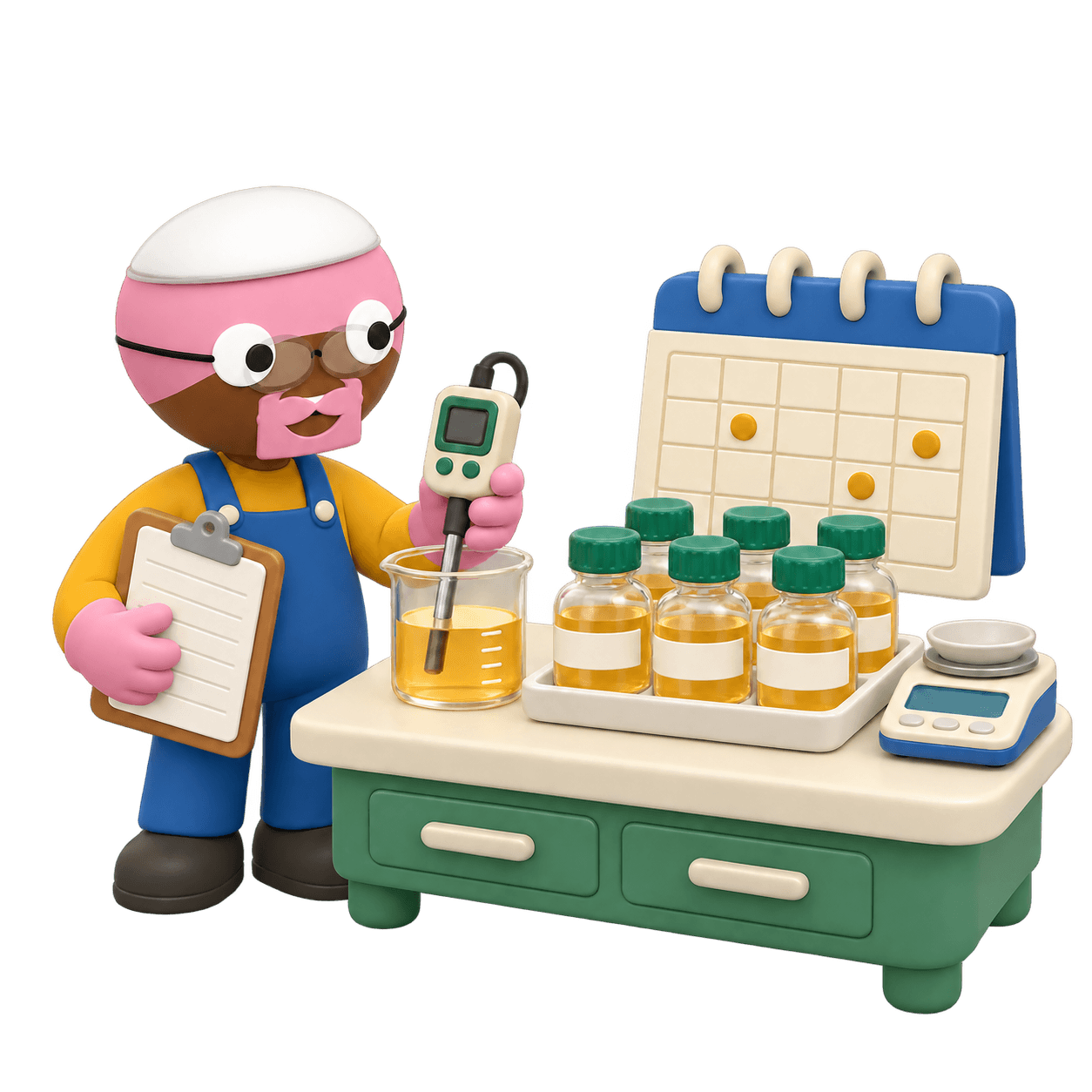
How a production lab sizes media days to the transfer schedule, keeps pH and gel steady, and writes the batch record that lets a struggling run be traced.
Techniques
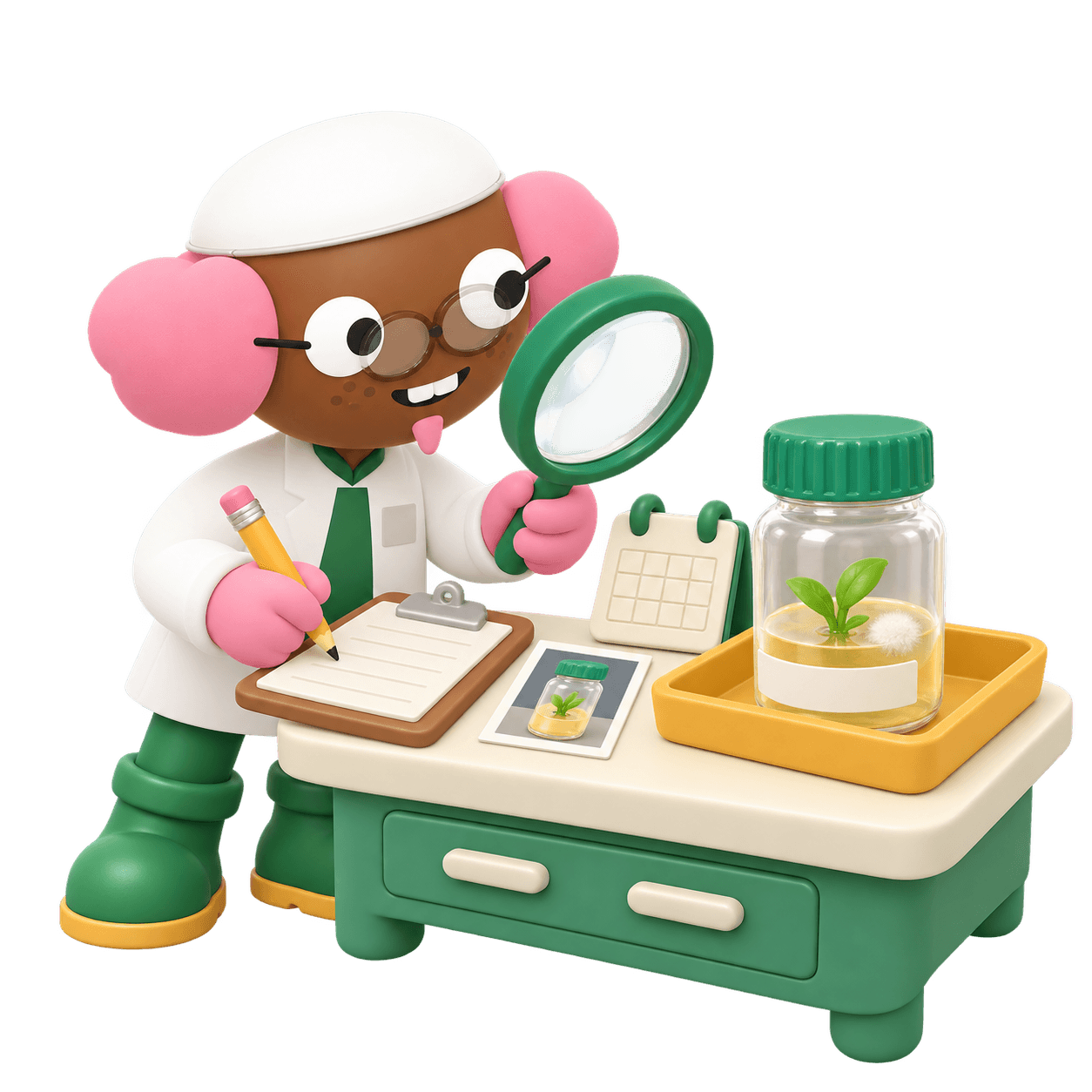
A turned jar is only a loss until it is recorded well enough to trace back to a media batch, a hood, a transfer session or a mother plant.
Lab Equipment
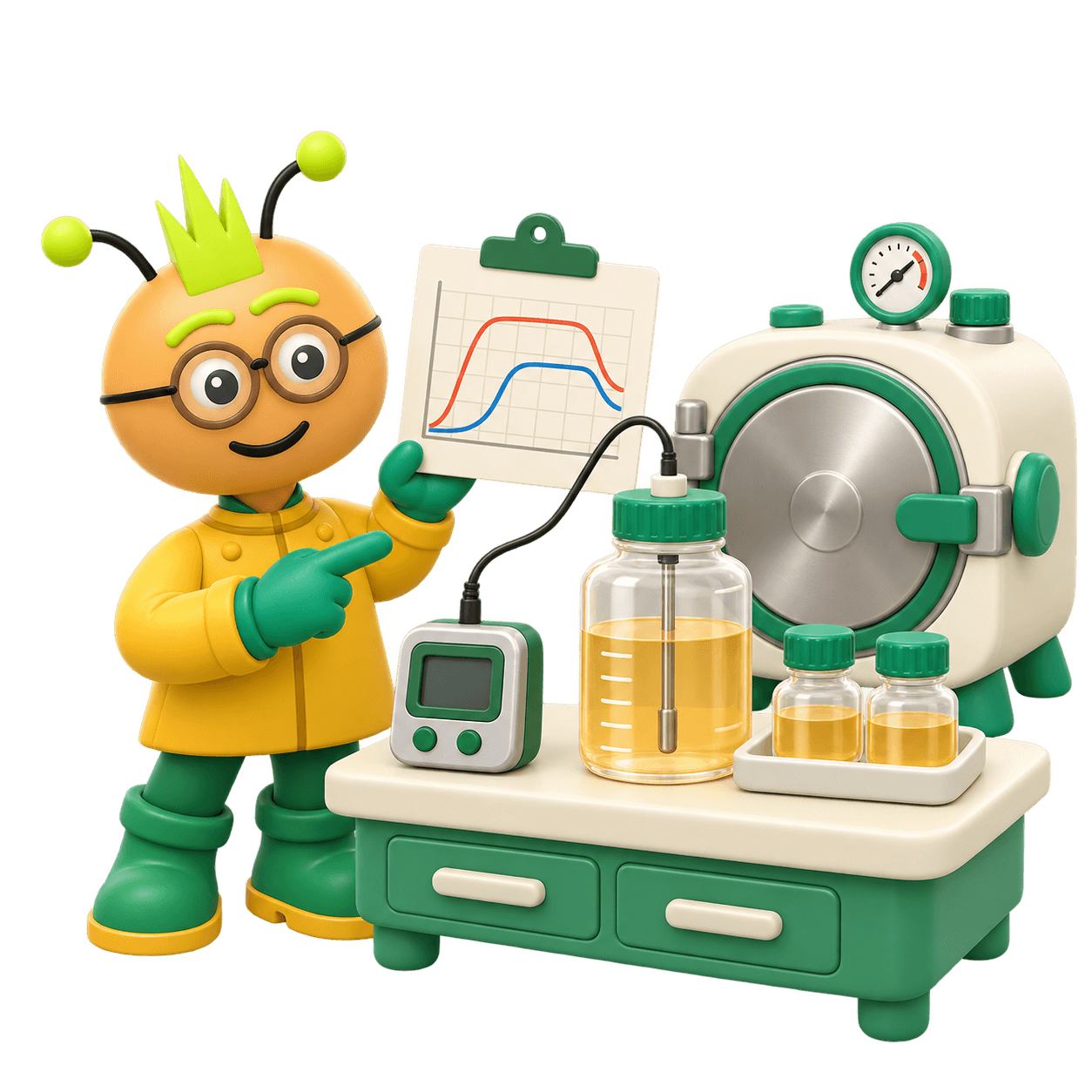
An autoclave printout describes the chamber. Load probes, standalone loggers, indicators and calibrated instruments show whether the slowest bottle got hot enough, for long enough.
Lab Equipment
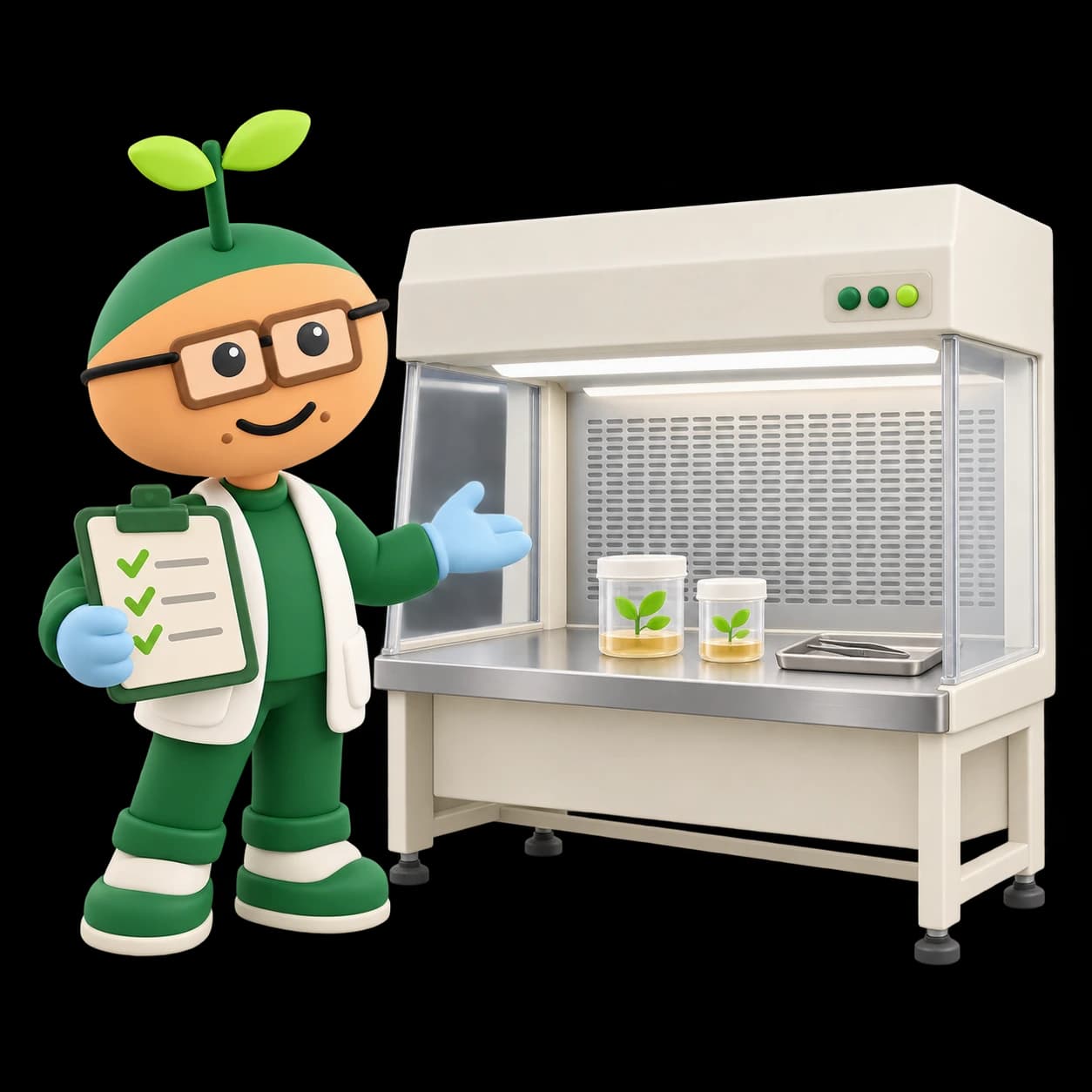
A clean bench protects the jar, not the person in front of it. How to choose, place, certify and clean transfer-room hoods, and keep a record that lets contamination be traced to a bench.
Lab Equipment
A culture grows under the light and heat at its own shelf, not the room's setpoint. What research supports on LEDs, PPFD, spectrum and photoperiod, and what to log shelf by shelf.
Lab Equipment
What belongs on a culture vessel label, how to test label stock and printers against the culture room, and what to record so a shipped lot traces back to its source.
Lab Equipment
Glass, polycarbonate and polypropylene compared on autoclaving, reuse and clarity, what closures do to gas exchange, and why a production lab settles on a few standard sizes.
Lab Equipment
Distilled, deionized or reverse osmosis: what each removes, what a resistivity reading can and cannot tell you, why stored water drifts, and what to write on the batch record.
Techniques
Cosemar Ozono's chief executive told Hortidaily that ozone is gaining ground in greenhouse irrigation, but only with calibration, monitoring and trained staff. Here is what he says to measure, where the risks sit, and what a propagation lab should ask before buying.
Techniques
A rooted plantlet has spent its whole life in a sealed, humid, sugar-fed jar. Stage IV is where it learns to live without one, and where a lot of good stage-III work is lost.
Techniques
Solvents, units, storage and sterilization for auxin, cytokinin and GA3 stocks, and the label and batch record that let a media problem be traced back to a bottle.
Techniques
Cooler rooms, dimmer light and leaner media can stretch the time between transfers from weeks to months. Here is what genebanks do, where species differ, and what to record so stored lines are not forgotten.
Lab Equipment
Which procedures to write first, what each one needs to contain, and how to keep versions, training and bench copies in step.
Techniques
One open-access paper gives a lab a seed explant, 3 mg/L BAP and 18 shoots per explant for Alocasia longiloba. Here is what those figures cover, and the production numbers they do not.
Techniques
A 2025 paper in Plants takes variegated 'White Knight' from petiole explants to acclimatized plantlets. Here is the method as reported — explant, sterilization, growth regulators, multiplication rate — and what it does not tell a lab adopting the crop.
Techniques
A 2020 study at an Ethiopian micropropagation facility pushed contamination-free ginger microshoots to 87–93% with cefotaxime — while explant deaths climbed with every step up in dose. The numbers, and where they stop applying.
Lab Equipment
Encapsulating a bud, node or embryo in alginate is a storage and shipping tool, not a magic bead. A PLOS One cassava study puts numbers on the calcium source and the polymer concentration.
Lab Equipment
A 2022 F1000Research review puts gelling agents and carbon sources at the top of the substitution list and cites figures putting media at 30 to 35 percent of the cost of a micropropagated plant. What it does not hand you is a recipe.
Techniques
An open-access chapter by Cimen Atak and Ozge Celik compiles explant choices and surface sterilization regimes for Anthurium. Here is what it states, whose results they are, and where its figures stop.
Techniques
A 2022 study in Plants put a broad-spectrum biocide in apple shoot medium for 12 weeks, then watched the cultures for 24 weeks without it. The result split along cultivar lines.
Lab Equipment
A 2019 review of somatic embryogenesis in conifers sets out which steps of the process research has managed to mechanize, which nobody has attempted, and what that means for anyone costing a scale-up.
Techniques
A 2017 Biological Research paper on Fragaria chiloensis reports what PVP, BAP, IBA, TDZ and GA3 did to meristems and plantlets of two accessions at six weeks. Here is what it measured, and what it leaves to your own bench.
Techniques
A recent open-access review gathers the known drivers of hyperhydric (vitrified) shoots, from cytokinin and gelling agent to ammonium ratio and gas exchange. Almost every result in it belongs to one species and one study.
Lab Equipment
A peer-reviewed grapevine review makes the case for liquid nitrogen storage as a backup to field and in vitro collections, and for cryotherapy as a route to virus-free stock. Here is what it states, and what it leaves for your own bench.
Techniques
2,4-D is the auxin most often used to start callus and somatic embryogenesis. A 2023 Scientific Reports study on Coffea leaf explants tracked how dose, species, DNA methylation and DNA damage line up with abnormal embryos.
Techniques
A 2020 open-access review lays out the market and the conventional-propagation problem that make Vaccinium attractive to micropropagators. Its protocol detail is a different matter, and each figure belongs to a study and a genotype.
Lab Equipment
A Slovenian-French program combined heat treatment, meristem micrografting and RT-PCR testing on preclonal grapevine candidates. Its numbers show what clean-stock production can cost in losses and time, and what a paper cannot tell you about equipment.
Techniques
A 2020 open-access study on Paeonia lactiflora 'Festival Maxima' compared a salt dip, PVP in the medium, a cold hold and an early transfer. Here is what it did, what it found, and what to check before borrowing any of it.
Techniques
A 2021 comparison of agar, bacto agar, gelrite and phytagel across three stages of rice regeneration shows what the gel can change in a culture, and where the result stops applying to your lab.
Reading path